
Achieving a perfectly tender steak is the holy grail for many home cooks. The dream is a steak that’s juicy, melt-in-your-mouth tender, and bursting with flavor, not a tough, chewy disappointment. The good news is that this culinary goal is well within reach, regardless of the cut you choose or your current cooking experience. It all comes down to understanding the science behind meat tenderness and applying a few key techniques.
From selecting the right cut to mastering the cooking process and allowing for proper resting, each step plays a crucial role. We’ll explore the factors that influence steak tenderness, from the animal’s diet and age to the specific muscles used.
Then, we’ll dive into practical, actionable methods you can implement in your own kitchen. Whether you prefer grilling, pan-searing, or sous vide, these strategies will elevate your steak game.
Key Takeaways
- Cut Matters: Choose cuts naturally higher in fat and from less-worked muscles for inherent tenderness.
- Moisture is Key: Proper cooking techniques and avoiding overcooking are paramount to retaining steak’s natural juices.
- Tenderizing Techniques: Physical methods like pounding, scoring, or marinades can break down tough muscle fibers.
- Temperature Control: Using a meat thermometer is essential for cooking steaks to their ideal internal temperature, preventing overcooking.
- Resting is Non-Negotiable: Allowing a steak to rest post-cooking redistributes juices, ensuring maximum tenderness and flavor.
- Slicing Technique: Cutting against the grain significantly impacts the perceived tenderness of the cooked steak.

Understanding Steak Tenderness: The Science Behind The Chew
The texture of a steak, its tenderness, is a complex interplay of biological factors and culinary techniques. Understanding these elements is the first step to consistently achieving tender results. Tenderness in beef is primarily determined by the connective tissues and muscle fibers within the meat.
Muscle Fiber And Connective Tissue
Beef is muscle, and like any muscle, it’s composed of fibers. The toughness of a steak is largely influenced by how much these fibers have been worked during the animal’s life and how much collagen, a type of connective tissue, surrounds them. Muscles that are frequently used, such as those in the legs and shoulders of the cow, will naturally have tougher fibers and more abundant connective tissue. Cuts from these areas, like the chuck or round, require more careful preparation to become tender.
Conversely, muscles that are less exercised, such as those along the spine (like the ribeye or strip loin), tend to be more tender. These cuts have finer muscle fibers and less connective tissue. The fat content, both marbling (intramuscular fat) and subcutaneous fat (the outer layer), also plays a significant role. Fat melts during cooking, adding moisture and lubricating the muscle fibers, which contributes to a perception of tenderness and enhances flavor.
Factors Influencing Tenderness
Several factors, from the animal’s life to post-mortem processes, affect the final tenderness of your steak:
- Animal Age: Younger animals generally produce more tender meat. As cattle age, their muscle fibers thicken and connective tissue becomes more robust. This is why veal (young cattle) is known for its tenderness.
- Diet and Breed: The diet of the cattle can influence fat composition and overall meat quality. Certain breeds are also known for producing more tender beef. For instance, Angus cattle are often prized for their marbling.
- Aging Process: This is a critical post-mortem step. Dry-aging and wet-aging allow natural enzymes within the meat to break down muscle proteins and connective tissues, significantly increasing tenderness and developing complex flavors. Dry-aging, where sides of beef are hung in a controlled environment, leads to greater moisture loss and a more concentrated flavor, while wet-aging, where meat is vacuum-sealed and aged in its own juices, is more common and also enhances tenderness.
- Primal Cut and Specific Muscle: As mentioned, different parts of the cow yield different levels of tenderness. Understanding primal cuts (like the rib, loin, chuck, round) and the specific muscles within them is key to selecting tender steaks.
Choosing The Right Cut For Maximum Tenderness
The foundation of a tender steak lies in selecting the right cut. While many cuts can be made tender with proper technique, some are inherently more forgiving and offer a head start. Focusing on cuts from the rib and loin primals is a good strategy for guaranteed tenderness.
Naturally Tender Cuts
These cuts come from muscles that do very little work, resulting in fine, tender muscle fibers.
- Filet Mignon (Tenderloin): This is arguably the most tender cut of beef. It comes from the short loin primal and is known for its buttery texture and mild flavor. Because it’s from a muscle that isn’t weight-bearing, it’s exceptionally tender.
- Ribeye: A favorite among steak lovers for its rich marbling and robust flavor. The ribeye comes from the rib primal and is known for its tenderness and juiciness, thanks to the intramuscular fat.
- New York Strip (Strip Loin): Also from the short loin, the strip steak offers a good balance of tenderness and beefy flavor. It has a slightly firmer texture than the filet mignon but is still very tender.
- T-Bone and Porterhouse: These steaks are unique because they contain both the strip loin and the filet mignon, separated by a T-shaped bone. A porterhouse is essentially a larger T-bone with a more substantial portion of filet. They offer the best of both worlds in terms of flavor and tenderness.
Cuts Requiring More Attention
While these cuts might be less tender inherently, they can be transformed into delicious, tender steaks with the right preparation and cooking methods. They often offer a more intense beefy flavor and can be more budget-friendly.
- Sirloin: A versatile cut that can be reasonably tender, especially the top sirloin. It’s a good middle-ground option.
- Flank Steak: A lean, flavorful cut that can be tough if not handled correctly. It’s best marinated and cooked quickly over high heat, then sliced thinly against the grain.
- Skirt Steak: Similar to flank steak, skirt steak is thin, flavorful, and can be tough. It benefits greatly from marinades and quick, high-heat cooking.
- Chuck Steak: This comes from the shoulder area and is a tougher cut, but it’s incredibly flavorful and cost-effective. It excels when braised or slow-cooked, but can be tenderized for grilling with pounding and marinades.
When selecting your steak, look for good marbling. These thin streaks of fat within the muscle melt during cooking, basting the steak from the inside and contributing significantly to both tenderness and flavor. A thicker cut (at least 1 to 1.5 inches) is also generally easier to cook to the desired doneness without overcooking the interior.

Pre-cooking Techniques For Ultimate Tenderness
Before your steak even hits the heat, several preparation steps can dramatically improve its tenderness. These methods work by physically breaking down muscle fibers, tenderizing the meat, or adding moisture.
Marinating For Tenderness And Flavor
Marinades are not just for flavor; they can also tenderize your steak. The key ingredients that aid in tenderizing are acids and enzymes.
- Acidic Ingredients: Ingredients like citrus juice (lemon, lime), vinegar, or wine contain acids that help break down the tough proteins on the surface of the meat. However, prolonged exposure to strong acids can “cook” the exterior of the meat, resulting in a mushy texture.
- Enzymatic Ingredients: Certain fruits contain natural enzymes that are potent tenderizers. Pineapple (bromelain) and papaya (papain) are excellent examples. Use these sparingly, as they can quickly turn your steak into a mushy mess. A marinade containing these should typically be used for no more than 30 minutes to an hour.
- Oil and Seasonings: Oil helps carry flavors into the meat and keeps it moist. Salt, garlic, herbs, and spices add flavor depth.
Pro Tip: For tougher cuts like flank or skirt steak, a marinade of 30 minutes to a few hours can make a world of difference. For naturally tender cuts, a shorter marinade (15-30 minutes) is sufficient, primarily for flavor, or you can skip the marinade altogether.
The Power Of Pounding And Scoring
These are direct physical methods to break down tough muscle structures.
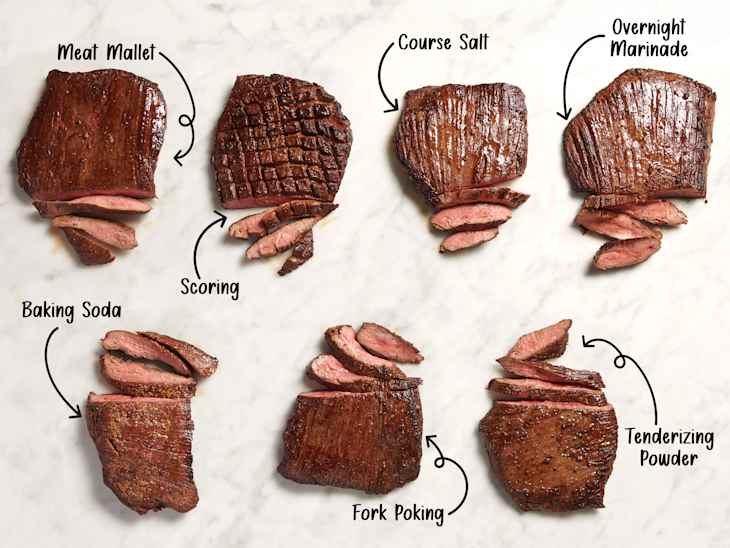
- Pounding: For tougher cuts, you can use a meat mallet or even the bottom of a heavy pan to gently pound the steak. This physically breaks down the muscle fibers and connective tissues, making the meat more tender. Be careful not to pound too aggressively, as this can result in a mushy texture. Aim for an even thickness.
- Scoring: This involves making shallow cuts across the surface of the steak in a crosshatch pattern. This is particularly effective for cuts with a lot of connective tissue or a tough outer membrane. The scores help to cut through these tougher fibers and allow marinades to penetrate more effectively.
Dry Brining: A Salty Secret To Tenderness
Dry brining is a simple yet incredibly effective technique that enhances both flavor and tenderness. It involves generously salting the steak and letting it rest in the refrigerator, uncovered, for a period ranging from a few hours to a couple of days.
Here’s how it works:
- Salting: Sprinkle the steak evenly on all sides with kosher salt (about ½ teaspoon per pound of meat).
- Resting: Place the salted steak on a wire rack set over a baking sheet and refrigerate, uncovered. The salt initially draws moisture out of the steak.
- Reabsorption: Over time, the salt dissolves in the drawn-out moisture, creating a concentrated brine. This brine is then reabsorbed back into the meat, seasoning it deeply and breaking down some of the muscle proteins.
- Drying: As the steak rests uncovered, the surface dries out, leading to a better sear and a more flavorful crust when cooked.
Dry brining is particularly beneficial for thicker cuts and requires no additional liquid, unlike wet brining. It’s a method that requires patience but rewards you with exceptionally tender and flavorful results.
Mastering The Cook: Techniques For A Tender Steak
The cooking process itself is where many steak tenderness issues arise. Overcooking is the most common culprit, but proper heat management and cooking methods are crucial.
Pan-searing For A Perfect Crust And Tender Interior
Pan-searing is a popular method for achieving a beautiful, flavorful crust while keeping the inside tender and juicy.
- Pat Dry: Ensure your steak is completely dry. Moisture is the enemy of a good sear. Use paper towels to pat it thoroughly.
- Hot Pan: Heat a heavy-bottomed skillet (cast iron is ideal) over medium-high to high heat. Add a high-smoke-point oil like canola, grapeseed, or avocado oil. The oil should shimmer but not smoke excessively.
- Sear: Carefully place the steak in the hot pan. Don’t overcrowd the pan; cook steaks in batches if necessary. Sear for 2-4 minutes per side, depending on thickness, until a deep brown crust forms.
- Reduce Heat and Baste: Lower the heat to medium. Add butter, garlic, and herbs (like rosemary or thyme) to the pan. As the butter melts, tilt the pan and use a spoon to continuously baste the steak with the melted butter and aromatics. This adds flavor and helps cook the steak evenly.
- Cook to Temperature: Use a meat thermometer to check for doneness.
Grilling: High Heat, Low Fuss
Grilling imparts a distinct smoky flavor and a beautiful char.
- Preheat Grill: Ensure your grill is clean and well-preheated to a high temperature.
- Direct Heat: Sear the steak over direct heat for a few minutes per side to develop grill marks and a crust.
- Indirect Heat (Optional): For thicker steaks, move them to a cooler part of the grill (indirect heat) to finish cooking to your desired doneness without burning the exterior.
- Monitor Temperature: Again, a meat thermometer is your best friend.
Sous Vide: The Ultimate In Precision Tenderness
Sous vide cooking involves vacuum-sealing food and cooking it in a precisely temperature-controlled water bath. This method guarantees edge-to-edge perfect doneness and exceptional tenderness.
- Season and Seal: Season your steak and vacuum-seal it in a food-safe bag.
- Water Bath: Cook the steak in a water bath set to your desired final temperature (e.g., 130°F / 54°C for medium-rare). The cooking time depends on thickness, typically 1-4 hours.
- Sear: Once cooked, remove the steak from the bag, pat it very dry, and give it a quick, high-heat sear in a pan or on a grill to develop a crust. This searing step is crucial for flavor and appearance.
Sous vide is particularly effective for making less tender cuts incredibly tender, as the long, slow cooking time at a precise temperature breaks down tough tissues without overcooking.
Understanding Doneness Levels And Temperature
The most common reason for a tough steak is overcooking. Muscle fibers contract and expel moisture as they heat up. Once they reach a certain temperature, they become irreversibly tough. Using a meat thermometer is non-negotiable for consistent results.
Here’s a general guide for internal temperatures (always remove steak 5°F below target as it will continue to cook while resting):
- Rare: 125-130°F (52-54°C) – Cool red center
- Medium-Rare: 130-135°F (54-57°C) – Warm red center (often considered ideal)
- Medium: 135-145°F (57-63°C) – Warm pink center
- Medium-Well: 145-155°F (63-68°C) – Slightly pink center
- Well-Done: 160°F+ (71°C+) – Little to no pink
Example: If you’re aiming for medium-rare (130-135°F), pull your steak off the heat when it reads 125-130°F.
| Doneness | Target Temperature (°F) | Target Temperature (°C) | Appearance |
|---|---|---|---|
| Rare | 125-130°F | 52-54°C | Cool to warm red, very juicy |
| Medium-Rare | 130-135°F | 54-57°C | Warm red, juicy |
| Medium | 135-145°F | 57-63°C | Warm pink, slightly less juicy |
| Medium-Well | 145-155°F | 63-68°C | Mostly brown, a hint of pink, less juicy |
| Well-Done | 160°F+ | 71°C+ | Brown throughout, dry, tough |
*Temperatures are pull temperatures; steak will rise 5-10°F during resting. *
The Crucial Step: Resting Your Steak
This is perhaps the most overlooked, yet one of the most critical, steps in achieving a tender and juicy steak. After all your efforts in cooking, skipping the rest can undo all your good work.
Why Resting Matters
When a steak cooks, the muscle fibers contract and push the moisture towards the center. If you cut into a steak immediately after cooking, these juices will spill out onto the plate, leaving the meat dry and less tender. Resting allows the muscle fibers to relax and reabsorb the juices throughout the steak.
Think of it like a sponge. When heated, the sponge contracts and squeezes out water. When it cools, it expands and can soak up that water again. The same principle applies to steak.
How To Rest Your Steak
The resting period should be at least 5 to 10 minutes for thinner steaks, and up to 15 minutes for thicker cuts.
- Remove from Heat: Once the steak reaches your desired temperature (remembering to pull it slightly before the final target), remove it from the pan or grill.
- Transfer: Place the steak on a clean cutting board or a warm plate.
- Tent Loosely: You can loosely tent the steak with aluminum foil. Avoid tightly wrapping it, as this can steam the crust you worked so hard to create.
- Be Patient: Resist the urge to cut into it too soon. The internal temperature will continue to rise slightly during this period, known as carryover cooking, which is why you pull it a few degrees early.
A steak that has been properly rested will have its juices distributed evenly, resulting in a more moist, tender, and flavorful bite from the first cut to the last.
Slicing For Maximum Tenderness Perception
Even if you’ve followed every step perfectly, the way you slice your steak can significantly impact its perceived tenderness. This is all about working with the grain of the meat.
Understanding The Grain
The grain of the meat refers to the direction in which the muscle fibers are aligned. These fibers run in parallel strands throughout the cut.
- Against the Grain: Cutting against the grain means slicing perpendicular to the direction of these muscle fibers. This shortens the fibers, making them easier to chew and thus increasing the perception of tenderness.
- With the Grain: Cutting with the grain means slicing parallel to the muscle fibers. This leaves the long, tough fibers intact, making the steak much harder to chew and feel tough.
How To Slice Properly
- Identify the Grain: Look closely at the steak. You should be able to see the direction in which the muscle fibers run.
- Slice Against It: Position your knife so that it is cutting across these fibers, at about a 45-degree angle to the grain.
- Thin Slices: For tougher cuts like flank or skirt steak, slicing thinly against the grain is especially crucial. For naturally tender cuts, it still enhances the eating experience.
- Sharp Knife: Always use a sharp knife. A dull knife will tear the meat rather than cleanly slicing through it, which can make even a tender steak feel tougher. If you’re serious about your kitchen tools, consider a quality kitchen knife set.
By slicing correctly, you make the chewing process much easier for your palate, turning a potentially tough bite into a tender, satisfying experience.
Frequently Asked Questions
How Can I Tenderize Steak Without A Meat Mallet?
If you don’t have a meat mallet, you can use the bottom of a heavy skillet, a rolling pin, or even a clean, sturdy bottle to gently pound the steak. For tougher cuts, marinating with acidic ingredients (like lemon juice or vinegar) or enzymatic ingredients (like pineapple or papaya, used sparingly) can also help tenderize the meat before cooking.
Dry brining is another excellent, non-physical tenderizing method.
What Is The Best Way To Tenderize A Tough Cut Of Steak Like Chuck?
Tougher cuts like chuck steak benefit most from methods that break down connective tissue over time or through moisture. Slow cooking methods like braising or stewing are ideal, as the long cooking time in liquid breaks down collagen into gelatin, making the meat incredibly tender and moist.
For grilling or pan-searing tougher cuts, pounding, marinating with acidic ingredients, and cooking to medium-rare are essential. Sous vide is also an excellent option for tenderizing tough cuts, as the precise temperature control allows collagen to break down without overcooking the meat.
Can I Over-tenderize A Steak?
Yes, it is possible to over-tenderize a steak, particularly when using enzymatic tenderizers like pineapple or papaya. These enzymes can break down muscle proteins too much, leading to a mushy or mushy texture that is unpleasant to eat. Mechanical methods like pounding can also result in a mushy texture if done too aggressively.
The key is to apply tenderizing techniques judiciously.
Does Resting A Steak Actually Make It More Tender, Or Just Juicier?
Resting a steak primarily makes it juicier, but this juiciness directly contributes to the perception of tenderness. When a steak rests, the muscle fibers relax and reabsorb the moisture that was pushed to the center during cooking. This even distribution of moisture lubricates the muscle fibers, making them easier to chew and thus increasing the overall tenderness. Without adequate resting, the juices escape onto the plate, leaving the meat drier and tougher.
How Do I Know If My Steak Is Tender Enough?
The best indicators of a tender steak are its texture when you cut and chew it, and its juiciness. A tender steak will yield easily to your knife when slicing against the grain and will feel soft and yielding when chewed, without requiring excessive effort. It should also feel moist and succulent in your mouth. While cooking to the correct internal temperature and resting are paramount, the inherent tenderness of the cut and proper slicing technique also play significant roles.
Leave a Reply