
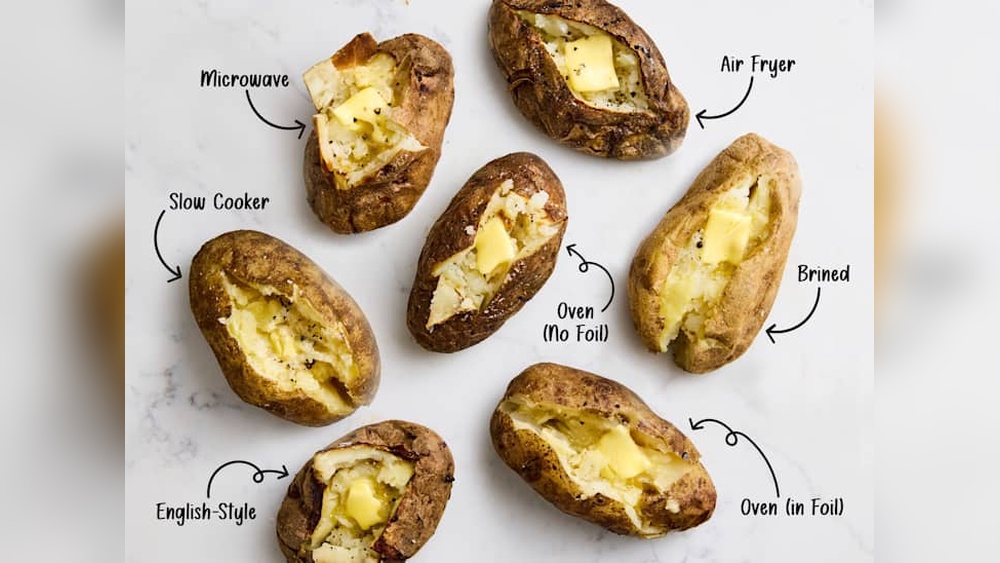
The humble baked potato is a culinary chameleon, a blank canvas ready to be transformed into a satisfying meal or a decadent side dish. Far from being a simple starchy staple, a perfectly baked potato boasts a fluffy, steamy interior encased in a delightfully crisp skin.
Achieving this ideal texture is a straightforward process, yet one that benefits from understanding a few key techniques. Whether you’re aiming for a classic loaded potato, a healthy plant-based option, or a quick weeknight dinner, mastering the art of the baked potato opens up a world of delicious possibilities.
Key Takeaways
- Potato Selection is Crucial: Opt for starchy varieties like Russets or Idaho potatoes for the best fluffy texture and crispy skin.
- Preparation is Key: Thoroughly wash and dry potatoes, then pierce them with a fork to allow steam to escape, preventing explosions.
- Oiling and Salting Enhance Texture: A light coating of oil and coarse salt creates a wonderfully crisp, flavorful skin.
- Baking Temperature and Time: A moderate oven temperature (around 400°F or 200°C) for 45-60 minutes ensures even cooking and perfect crispness.
- Doneness Test: The potato is ready when it yields easily to gentle pressure and a fork pierces the center with little resistance.
- Resting is Important: Allowing the potato to rest briefly after baking helps the interior steam and become fluffier.
- Versatile Toppings: Baked potatoes are ideal for a wide array of toppings, from classic cheese and bacon to gourmet vegetarian and vegan options.
The Science Behind The Perfect Baked Potato
Understanding the basic principles of cooking a potato can elevate your results from good to exceptional. The magic of a baked potato lies in the transformation of starch and the creation of a textural contrast between the soft interior and the crispy exterior.
When potatoes are heated, the starches within them gelatinize, absorbing moisture and becoming tender. Simultaneously, the moisture on the potato’s surface, especially when aided by oil and salt, crisps up in the dry heat of the oven, forming that desirable crackly skin.
The key to achieving this delicate balance lies in the moisture management within the potato. Piercing the potato skin with a fork is not just a suggestion; it’s a necessity. Without these vents, the steam generated inside the potato has no escape route, leading to an unevenly cooked interior and, in extreme cases, a potato that bursts in the oven. This simple step allows for controlled steam release, promoting even cooking and contributing to the fluffy texture.
Furthermore, the choice of potato variety plays a significant role. High-starch, low-moisture potatoes are ideal. These types break down more readily during baking, resulting in a fluffier, drier interior that readily absorbs butter and other toppings. Varieties like Russet and Idaho potatoes are renowned for their superior baking qualities, making them the go-to choice for this preparation method.
Selecting The Right Potato Variety
The foundation of an outstanding baked potato is the potato itself. Not all potatoes are created equal when it comes to baking; their starch content and moisture levels significantly impact the final texture. For the quintessential fluffy interior and crisp skin, starchy potatoes are your best bet.
Starchy Potatoes: The Gold Standard
- Russet Potatoes: These are arguably the most popular and widely available choice for baking. They have a thick, russet-colored skin that crisps up beautifully in the oven and a dense, starchy white flesh that becomes wonderfully fluffy when baked. Their low moisture content prevents them from becoming gummy.
- Idaho Potatoes: Often used interchangeably with Russets, true Idaho potatoes are grown in specific regions of Idaho and are known for their consistent quality and excellent baking characteristics. They share the same starchy, fluffy attributes as Russets.
- King Edward Potatoes: While less common in some regions, King Edwards are a heritage variety that bakes into a light, fluffy texture with a slightly nutty flavor. Their skin can also achieve a good crispness.
Waxy Potatoes: Best Avoided For Baking
Potatoes with a waxy texture, such as Red Bliss, Yukon Gold, or Fingerling potatoes, are generally not recommended for baking. These varieties have a higher moisture content and lower starch content. When baked, they tend to hold their shape more, resulting in a denser, moister, and sometimes slightly gummy interior. While delicious for other preparations like potato salads or gratins, they don’t yield the classic fluffy baked potato texture.
Size Matters
When selecting potatoes for baking, aim for medium to large-sized potatoes. Smaller potatoes will cook faster, but larger ones generally offer more surface area for crisping the skin and a more substantial portion for a meal. Ensure the potatoes are firm, free from sprouts, soft spots, or green patches, which can indicate undesirable compounds.

The Essential Preparation Steps
Before your potatoes even see the oven, a few crucial preparation steps will set you up for success. These seemingly small details significantly contribute to the final texture and overall appeal of your baked potato.
Washing And Scrubbing
Begin by thoroughly washing all potatoes under cold running water. Use a vegetable brush to scrub away any dirt or debris clinging to the skin. It’s imperative that the potatoes are completely dry after washing. Any residual moisture on the surface can hinder the skin’s ability to crisp up during baking. Pat them dry with paper towels or a clean kitchen towel.
Piercing For Airflow
This is a non-negotiable step for safe and even baking. Using a fork, pierce each potato 4-6 times on all sides. This creates small vents that allow steam to escape from the interior of the potato as it cooks. Without these perforations, the internal pressure can build up, potentially causing the potato to burst in the oven. This simple act also promotes more even cooking by allowing heat to penetrate the flesh more uniformly.
The Oil And Salt Ritual
For that coveted crispy, flavorful skin, a light coating of oil and coarse salt is essential.
- Oil: Drizzle a small amount of your preferred cooking oil (like olive oil, vegetable oil, or avocado oil) over each potato. Use your hands to rub the oil all over the surface, ensuring a thin, even layer. This helps the skin crisp up and prevents it from drying out too much.
- Salt: Immediately after oiling, sprinkle generously with coarse sea salt or kosher salt. The salt not only adds flavor to the skin but also helps to draw out moisture, further contributing to its crispness. Avoid using fine table salt, as it can dissolve too quickly and won’t provide the same textural benefit.
Baking Methods For The Perfect Potato
The oven remains the most reliable method for achieving a truly exceptional baked potato, offering the best balance of fluffy interior and crispy skin. However, other appliances can also be used, each with its own advantages and considerations.
Oven Baking: The Classic Approach
Oven baking is the traditional and most recommended method. It provides consistent, dry heat that is ideal for both cooking the potato through and crisping the skin.
- Preheat the Oven: Set your oven to 400°F (200°C). This moderate-high temperature is crucial for achieving the right balance of cooking time and crispness.
- Placement: Place the prepared potatoes directly on the oven rack. This allows hot air to circulate freely around all sides of the potato, promoting even cooking and crisping. If you’re concerned about drips, you can place a baking sheet on the rack below, but direct rack placement is ideal for maximum skin crispness.
- Baking Time: Bake for 45 to 60 minutes, or until the potatoes are tender when pierced with a fork and yield to gentle pressure. The exact time will depend on the size of the potatoes. Larger potatoes will require closer to 60 minutes, while smaller ones might be done in 45.
- The Doneness Test: The ultimate test is to gently squeeze the potato (using an oven mitt or tongs to avoid burns). It should feel soft and yield easily. A fork or skewer inserted into the center should meet little resistance.
Microwave Baking: The Speed Alternative
While not ideal for achieving a truly crispy skin, the microwave offers a significantly faster way to cook a potato. This method is best for when time is of the essence, and you can finish the potato in a hot oven or skillet for crisping.
- Preparation: Wash, dry, and pierce the potato as usual. You can optionally rub it with a little oil and salt.
- Microwaving: Place the potato on a microwave-safe plate. Microwave on high power for 5-7 minutes, flipping the potato halfway through. The time will vary depending on the microwave’s wattage and the potato’s size.
- Checking for Doneness: The potato should feel tender when squeezed. If it’s still firm, microwave in 1-minute increments until cooked through.
- Crisping (Optional): For a crispier skin, transfer the microwaved potato to a preheated 400°F (200°C) oven for 10-15 minutes.
Air Fryer Baking: Quick And Crispy
The air fryer is an excellent appliance for achieving a crispy skin in a shorter amount of time than traditional oven baking.
- Preparation: Wash, dry, pierce, oil, and salt the potatoes as described previously.
- Air Frying: Preheat your air fryer to 390°F (195°C). Place the potatoes in the air fryer basket, ensuring they are not overcrowded.
- Cooking Time: Air fry for 30-40 minutes, flipping the potatoes halfway through. The exact time will depend on the size of the potatoes and your specific air fryer model.
- Doneness: The potatoes should be tender when pierced and the skin should be crispy.
Slow Cooker Baking: Set It And Forget It
The slow cooker is perfect for hands-off cooking, especially when you want potatoes ready when you get home. However, this method will not produce a crispy skin.
- Preparation: Wash, dry, and pierce the potatoes. You can optionally wrap them in foil, though this will result in a softer skin.
- Slow Cooking: Place the potatoes in the slow cooker. Cook on high for 2-3 hours or on low for 6-8 hours, depending on your slow cooker and potato size.
- Doneness: The potatoes will be very tender and fluffy. For crispy skin, you’ll need to finish them under the broiler or in a hot oven for a few minutes after slow cooking.
Achieving The Ultimate Crispy Skin
The skin of a baked potato is often as important as the fluffy interior. Achieving that perfect crisp requires attention to detail during preparation and the baking process.
The Role Of Oil And Salt
As mentioned, the initial coating of oil and coarse salt is paramount. The oil facilitates heat transfer and prevents the skin from drying out too much, while the salt acts as a dehydrator, drawing out moisture and creating a brittle, crisp texture. Don’t be shy with the salt, especially if you plan on loading your potato with otherwise mild toppings.
High Heat And Air Circulation
High oven temperatures are crucial for crisping. A temperature of 400°F (200°C) is generally ideal. This heat rapidly evaporates surface moisture, leading to crisping. Equally important is air circulation. Placing the potatoes directly on the oven rack allows hot air to surround them on all sides, ensuring even crisping. Avoid overcrowding the oven, as this can trap steam and prevent the skins from becoming truly crisp.
The “double Bake” Technique
For the ultimate crispy skin, consider the “double bake” method.
- Bake the potatoes at a slightly lower temperature (e.g., 350°F or 175°C) until they are just cooked through but not yet fully tender. This takes approximately 30-40 minutes.
- Remove the potatoes from the oven. Let them cool slightly, then carefully scoop out most of the interior, leaving a thin shell of potato attached to the skin.
- Mash or fluff the scooped-out potato flesh with your desired additions (butter, cheese, herbs, etc. ).
- Spoon the filling back into the potato skins.
- Return the stuffed potato skins to a hot oven (400°F or 200°C) or under the broiler for another 10-15 minutes, until the skins are exceptionally crisp and the filling is heated through. This method guarantees a supremely crisp exterior.
Wrapping In Foil: A Compromise
Many people opt to wrap their potatoes in aluminum foil before baking. While this keeps the potato moist and can be convenient for serving, it is the enemy of crispy skin. The foil traps steam, resulting in a softer, steamed potato skin. If crispness is your goal, skip the foil and bake directly on the rack.
Fluffing The Interior: Achieving A Light Texture
Once you have a perfectly cooked potato with a crisp exterior, the final touch is ensuring the interior is light and fluffy. This is primarily achieved through the potato’s starch content and how it’s handled after baking.
The Role Of Potato Starch
As mentioned earlier, starchy potatoes like Russets are key. Their high starch-to-moisture ratio means that when cooked, the starch granules swell and separate, creating air pockets that give the potato its characteristic fluffy texture. Waxy potatoes, with their lower starch content, tend to remain denser.
The “squeeze” And “slice” Method
After baking, and once the potato is cool enough to handle (but still warm), gently squeeze it from the ends towards the middle. This action helps to break up the cooked starch strands and introduce air, making the interior fluffier. Then, make a lengthwise slit down the top of the potato. Use a fork to gently fluff up the exposed flesh.
Butter And Steam
Adding butter immediately after fluffing is a classic technique. The warmth of the potato melts the butter, which then seeps into the fluffy interior, adding richness and moisture. The residual steam trapped within the potato as you fluff it also contributes to its lightness. Avoid over-mixing or mashing the potato flesh too vigorously, as this can make it gummy.
Topping Your Baked Potato: From Classic To Gourmet
The beauty of a baked potato lies in its incredible versatility. It serves as the perfect base for an endless array of toppings, catering to every palate and dietary preference.
Classic Comfort Toppings
These are the tried-and-true favorites that evoke a sense of homey comfort:
- Butter and Sour Cream: The simplest, yet often the most satisfying. A generous dollop of butter and a spoonful of sour cream are timeless.
- Cheddar Cheese: Shredded sharp cheddar, melted over the hot potato, is a perennial favorite.
- Bacon Bits: Crispy, salty bacon bits add a delightful crunch and savory flavor.
- Chives or Green Onions: Finely chopped chives or green onions provide a fresh, sharp counterpoint to the richness.
- Salt and Pepper: A simple seasoning that enhances the potato’s natural flavor.
Hearty Meal Toppings
Transform your baked potato into a complete meal with these substantial additions:
- Chili: A hearty beef or vegetarian chili is a classic topping that makes for a filling meal.
- Pulled Pork or Chicken: Smoked pulled pork or BBQ chicken adds a smoky, savory dimension.
- Broccoli and Cheese: Steamed broccoli florets topped with melted cheese offer a healthier, yet still indulgent option.
- Taco Toppings: Seasoned ground beef or turkey, salsa, shredded lettuce, cheese, and a dollop of sour cream create a taco-inspired delight.
- Steak Strips: Sliced grilled steak and a drizzle of horseradish sauce or chimichurri elevate the baked potato to a steakhouse experience.
Vegetarian And Vegan Delights
Baked potatoes are wonderfully adaptable for plant-based diets:
- Hummus and Roasted Vegetables: A dollop of creamy hummus topped with colorful roasted vegetables like bell peppers, zucchini, and onions.
- Black Beans and Salsa: Seasoned black beans, corn, salsa, and avocado slices offer a Tex-Mex flair.
- Sautéed Mushrooms and Spinach: Garlic sautéed mushrooms and wilted spinach with a sprinkle of nutritional yeast for a cheesy flavor.
- Vegan Sour Cream and Chives: Many excellent dairy-free sour cream alternatives are available, perfect with fresh chives.
- Pesto and Sun-Dried Tomatoes: A flavorful combination that adds a Mediterranean twist.
Gourmet Twists
For a more refined experience, consider these elevated toppings:
- Smoked Salmon and Dill Cream Cheese: A luxurious combination that pairs well with the potato’s earthiness.
- Caramelized Onions and Gruyere: Sweet, slow-cooked onions with nutty Gruyere cheese create a sophisticated flavor profile.
- Truffle Oil and Parmesan: A drizzle of truffle oil and a sprinkle of sharp Parmesan cheese add an umami-rich finish.
- Lobster or Crab Meat: For a truly decadent treat, top with fresh seafood and a light butter sauce.
When choosing your toppings, consider the balance of flavors and textures. A good rule of thumb is to combine something creamy, something crunchy, something savory, and something fresh.
Common Baked Potato Mistakes And How To Avoid Them
Even with a simple dish like a baked potato, a few common pitfalls can lead to less-than-ideal results. Being aware of these and how to prevent them will ensure consistently delicious baked potatoes.
Mistake 1: Using The Wrong Potato Type
- The Problem: Using waxy potatoes (like red potatoes or Yukon Golds) instead of starchy ones.
- The Result: A dense, moist, and sometimes gummy interior instead of fluffy.
- The Fix: Always opt for starchy potatoes like Russets or Idaho for baking. Their low moisture and high starch content are essential for achieving a fluffy texture.
Mistake 2: Skipping The Piercing Step
- The Problem: Not piercing the potato skin before baking.
- The Result: The potato can explode in the oven due to trapped steam, creating a mess and ruining the potato.
- The Fix: Always pierce each potato several times with a fork before baking to allow steam to escape.
Mistake 3: Wrapping In Foil (when Crisp Skin Is Desired)
- The Problem: Wrapping the potato tightly in aluminum foil.
- The Result: A soft, steamed skin instead of a crispy one. The foil traps moisture.
- The Fix: If you desire crispy skin, bake the potato directly on the oven rack or on a baking sheet. Only use foil if you prefer a softer, steamed skin.
Mistake 4: Overcrowding The Oven
- The Problem: Packing too many potatoes into the oven at once.
- The Result: Poor air circulation, leading to uneven cooking and less crispy skins. Steam gets trapped.
- The Fix: Ensure there is adequate space between potatoes for hot air to circulate freely. Bake in batches if necessary.
Mistake 5: Under Or Over-baking
- The Problem: Not baking the potato long enough, or baking it for too long.
- The Result: Under-baked potatoes are hard in the center; over-baked potatoes can become dry and chalky.
- The Fix: Bake until the potato yields easily to gentle pressure and a fork pierces the center with little resistance. For a 400°F (200°C) oven, this typically takes 45-60 minutes for medium-large potatoes.
Mistake 6: Not Drying The Potato Thoroughly
- The Problem: Not drying the potato completely after washing.
- The Result: The skin will not crisp up properly, as surface moisture inhibits browning and crisping.
- The Fix: After washing, pat the potato completely dry with paper towels or a clean kitchen towel before oiling and salting.
A Comparison Of Baking Methods
To further illustrate the nuances of different baking approaches, consider this comparison table.
| Feature | Oven Baking | Microwave Baking | Air Fryer Baking | Slow Cooker Baking |
|---|---|---|---|---|
| **Skin Crispness** | Excellent | Poor (can be improved) | Very Good | Poor (unless finished) |
| **Interior Texture** | Excellent (fluffy) | Good (can be slightly dense) | Excellent (fluffy) | Excellent (very tender) |
| **Cooking Time** | 45-60 minutes | 5-10 minutes | 30-40 minutes | 2-8 hours |
| **Effort Level** | Moderate | Low | Moderate | Very Low |
| **Best For** | Classic baked potato | Speed, quick meals | Crispy skin, faster than oven | Hands-off cooking |
| **Energy Use** | Moderate | Low | Low to Moderate | Low (typically) |
Mastering the baked potato is a rewarding culinary skill that offers endless possibilities for delicious and satisfying meals. By understanding the importance of selecting the right potato, employing proper preparation techniques like piercing and oiling, and choosing the best baking method for your needs, you can consistently achieve that perfect balance of a fluffy interior and a delightfully crisp skin.
Leave a Reply